
How Much Should You Squat? Squat Standards by Bodyweight
By Jordan Hoppel · · Updated · 8 min read
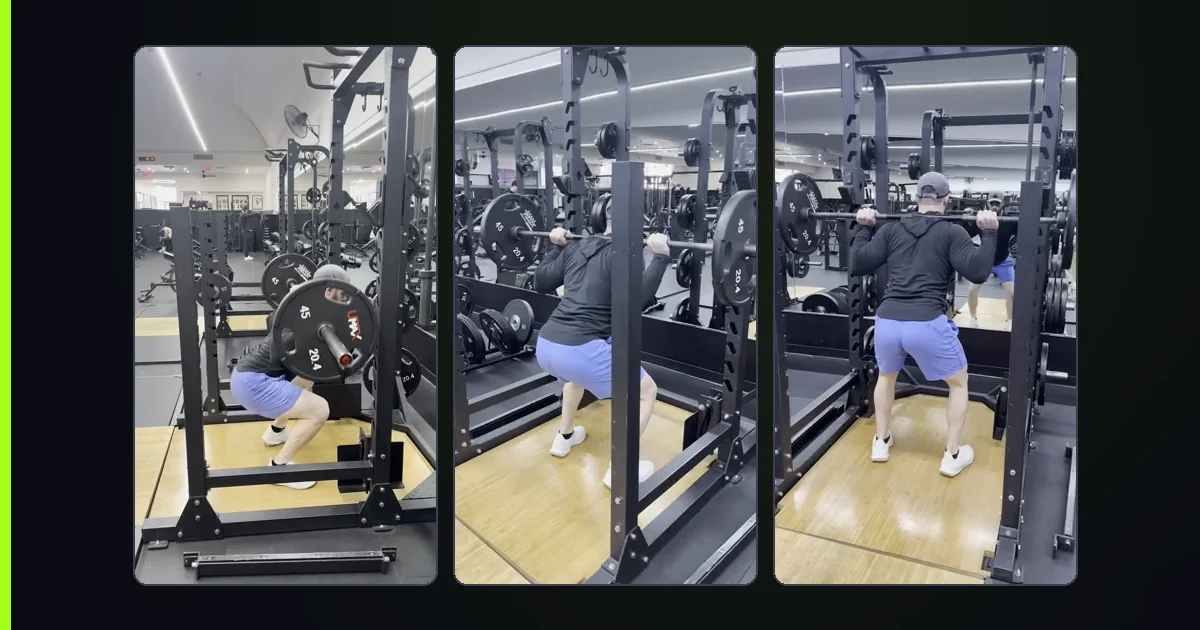
Among adult raw powerlifters, the median best squat for a man in the 83 kg (183 lb) class is about 410 lb (185 kg). For a woman in the 63 kg (139 lb) class it is about 230 lb (105 kg). These numbers come from 298,005 meet competitors since 2015, not from the average gym member.
Most squat standards online never say where their numbers came from. These do. Every figure below is computed from OpenPowerlifting, a public record of powerlifting meet results, and every cell shows how many lifters it is based on.
The catch, stated up front: these are people who signed up for a powerlifting meet, trained for it and squatted to competition depth in front of judges. That is a strong, self-selected group. If you have never competed, landing below their median is normal and says nothing bad about your training.
Where the numbers come from
The tables use full-power meets (squat, bench and deadlift on one day) in the raw division, which allows a belt and knee sleeves but not knee wraps or squat suits. The method:
- Meets from January 2015 to October 2026.
- Adults only: a recorded age of 18 or older, or an age class that starts at 18 or above. Results with no age information at all were left out.
- Only lifters who finished the meet with a successful lift in all three events. Disqualifications and no-shows were dropped.
- One number per person: each lifter's best successful squat across all of their meets in that window, so someone who competed 20 times counts once, not 20 times.
- Each lifter is placed in an IPF weight class using the bodyweight recorded at the meet where that best squat happened.
That leaves 198,913 men and 99,092 women. Weights are rounded to the nearest 5 lb or 2.5 kg.
Squat standards for men
| Bodyweight class | Lifters | Squat 10th | 25th | Median | 75th | 90th |
|---|---|---|---|---|---|---|
| Up to 59 kg (130 lb) | 3,933 | 200 | 250 | 305 | 355 | 395 |
| Up to 66 kg (146 lb) | 9,387 | 240 | 290 | 340 | 390 | 435 |
| Up to 74 kg (163 lb) | 24,342 | 280 | 330 | 375 | 425 | 470 |
| Up to 83 kg (183 lb) | 42,682 | 310 | 360 | 410 | 465 | 515 |
| Up to 93 kg (205 lb) | 43,943 | 330 | 385 | 440 | 495 | 545 |
| Up to 105 kg (231 lb) | 37,225 | 355 | 410 | 470 | 530 | 585 |
| Up to 120 kg (265 lb) | 22,817 | 375 | 430 | 500 | 560 | 630 |
| Over 120 kg (over 265 lb) | 14,584 | 385 | 460 | 535 | 610 | 690 |
| All classes | 198,913 | 310 | 370 | 435 | 500 | 570 |
All squat values in that table are pounds. The same lifters in kilograms:
| Bodyweight class | Lifters | Squat 10th | 25th | Median | 75th | 90th |
|---|---|---|---|---|---|---|
| Up to 59 kg (130 lb) | 3,933 | 90 | 112.5 | 137.5 | 160 | 180 |
| Up to 66 kg (146 lb) | 9,387 | 110 | 132.5 | 155 | 177.5 | 197.5 |
| Up to 74 kg (163 lb) | 24,342 | 125 | 150 | 170 | 192.5 | 212.5 |
| Up to 83 kg (183 lb) | 42,682 | 140 | 162.5 | 185 | 210 | 232.5 |
| Up to 93 kg (205 lb) | 43,943 | 150 | 175 | 200 | 225 | 247.5 |
| Up to 105 kg (231 lb) | 37,225 | 160 | 185 | 212.5 | 240 | 265 |
| Up to 120 kg (265 lb) | 22,817 | 170 | 195 | 227.5 | 255 | 285 |
| Over 120 kg (over 265 lb) | 14,584 | 175 | 207.5 | 242.5 | 277.5 | 312.5 |
| All classes | 198,913 | 140 | 167.5 | 197.5 | 227.5 | 257.5 |
Squat standards for women
| Bodyweight class | Lifters | Squat 10th | 25th | Median | 75th | 90th |
|---|---|---|---|---|---|---|
| Up to 47 kg (104 lb) | 2,329 | 120 | 150 | 180 | 215 | 240 |
| Up to 52 kg (115 lb) | 6,374 | 145 | 175 | 205 | 240 | 270 |
| Up to 57 kg (126 lb) | 10,870 | 155 | 185 | 220 | 260 | 285 |
| Up to 63 kg (139 lb) | 16,956 | 165 | 200 | 230 | 270 | 310 |
| Up to 69 kg (152 lb) | 17,435 | 175 | 210 | 250 | 285 | 325 |
| Up to 76 kg (168 lb) | 16,775 | 180 | 220 | 260 | 305 | 340 |
| Up to 84 kg (185 lb) | 11,807 | 185 | 225 | 265 | 315 | 355 |
| Over 84 kg (over 185 lb) | 16,546 | 190 | 230 | 280 | 335 | 385 |
| All classes | 99,092 | 170 | 205 | 250 | 290 | 335 |
Again in pounds. In kilograms:
| Bodyweight class | Lifters | Squat 10th | 25th | Median | 75th | 90th |
|---|---|---|---|---|---|---|
| Up to 47 kg (104 lb) | 2,329 | 55 | 67.5 | 82.5 | 97.5 | 110 |
| Up to 52 kg (115 lb) | 6,374 | 65 | 80 | 92.5 | 110 | 122.5 |
| Up to 57 kg (126 lb) | 10,870 | 70 | 85 | 100 | 117.5 | 130 |
| Up to 63 kg (139 lb) | 16,956 | 75 | 90 | 105 | 122.5 | 140 |
| Up to 69 kg (152 lb) | 17,435 | 80 | 95 | 112.5 | 130 | 147.5 |
| Up to 76 kg (168 lb) | 16,775 | 82.5 | 100 | 117.5 | 137.5 | 155 |
| Up to 84 kg (185 lb) | 11,807 | 85 | 102.5 | 120 | 142.5 | 160 |
| Over 84 kg (over 185 lb) | 16,546 | 85 | 105 | 127.5 | 152.5 | 175 |
| All classes | 99,092 | 77.5 | 92.5 | 112.5 | 132.5 | 152.5 |
- 59 kg305 lb
- 66 kg340 lb
- 74 kg375 lb
- 83 kg410 lb
- 93 kg440 lb
- 105 kg470 lb
- 120 kg500 lb
- 120+ kg535 lb
How do I read a squat percentile?
A percentile tells you the share of competitors who squatted less than a given weight. In the 83 kg men's row, the 25th percentile is 360 lb: a quarter of the men in that class never made a meet squat heavier than that. The median, 410 lb, splits the class in half. At the 90th percentile, 515 lb, only one competitor in ten did better.
There are no "beginner", "intermediate" or "advanced" labels here on purpose. The data cannot tell how long anyone had trained, so any label would be a guess. If you want words, use the bands themselves: below the 25th percentile is the lower quarter of meet competitors, the 25th to 75th is the middle half, and above the 90th is the top tenth.
What is a good squat for a 180 lb man?
A 180 lb man falls in the 83 kg class (up to 183 lb). Among raw competitors in that class, the middle half squatted between about 360 and 465 lb, with a median of 410 lb. A 315 lb squat at that bodyweight sits just above the 10th percentile of competitors. If 315 is your target, see how to squat 315 from 225.
What is a good squat for a 150 lb woman?
A 150 lb woman falls in the 69 kg class (up to 152 lb). The median competitor there squatted about 250 lb (112.5 kg), and the middle half fell between roughly 210 and 285 lb. A 150 lb single at that bodyweight sits under the 10th percentile of this meet-going group, which says more about who enters meets than about you.
How do I find my own squat max to compare?
You need a one-rep max to compare against these tables, and you do not need to test a true single to get one. A set of 3 to 5 good reps lets you estimate it. The method is in how to calculate your one-rep max, or put a recent set into the 1RM calculator. Then the strength standards calculator scores it for your age and bodyweight against standards built for people who train in gyms, with squat depth set to parallel.
Be honest about depth when you compare. A meet squat counts only when the hip crease drops below the top of the knee, and a judge watches every rep. A half squat in a gym is not the same lift, so it will flatter you against these tables.
Where these squat standards fall short
- Competitors are not the general population. People who enter meets train specifically for these lifts, often for years. It is reasonable to expect people who lift without competing to sit lower, but no comparable public dataset for non-competitors exists to say by how much.
- Each number is a lifter's best. Taking each person's best meet squat since 2015 pushes the figures up compared with a single typical meet.
- Weigh-ins flatter bodyweight. Some federations weigh in up to 24 hours before lifting, so lifters often cut weight and are heavier on the platform than their class suggests.
- Raw is not bare. The raw division allows a belt and knee sleeves, and both can help.
- Tested and untested meets are mixed together. Results from drug-tested and untested federations are pooled here.
- Ages are pooled. Masters lifters sit in the same tables as lifters in their twenties.
For the numbers on the other big lower-body lift, see deadlift strength standards. If your own number has stalled, why your squat stopped going up covers the usual causes.
Sources
- OpenPowerlifting, data release dated 2026-10-24 (meet results through 2026-10-18). Public domain: "OpenPowerlifting data is contributed to the public domain." This page uses data from the OpenPowerlifting project, openpowerlifting.org. You may download a copy of the data at gitlab.com/openpowerlifting/opl-data.
- OpenPowerlifting CSV download used for this analysis: openpowerlifting-latest.zip
Frequently asked questions
What is the average squat for a man?
Among 198,913 adult men in raw powerlifting meets since 2015, the median best squat was about 435 lb (197.5 kg) across all weight classes. That is a competitor median. The average man who lifts but has never competed will usually squat less, and there is no comparable public dataset to say how much less.
What is the average squat for a woman?
Among 99,092 adult women in raw powerlifting meets since 2015, the median best squat was about 250 lb (112.5 kg) across all weight classes. In the 63 kg (139 lb) class it was about 230 lb.
Is a bodyweight squat for a single rep good?
For most people who lift recreationally it is a solid milestone. Against competitors it is on the low side: in nearly every class the 10th percentile of meet competitors is above bodyweight for men, and close to it or above for women.
Do these squat standards include knee wraps or squat suits?
No. Only the raw division is included, which allows a belt and knee sleeves. Wrapped and equipped results were left out because wraps and suits add a lot to a squat.
Why are these squat numbers higher than other standards I have seen?
They come from people who compete in powerlifting, and each lifter is counted at their best meet squat. Both push the numbers up compared with the general gym population.
New lifting guides every week
Short training clips and the numbers behind them. Follow along or start training free.
Keep reading
How Much Should You Deadlift? Deadlift Standards by Bodyweight
Deadlift percentiles by sex and IPF weight class, in pounds and kilos, built from the meet results of 298,005 raw powerlifting competitors. Read them honestly.
How to Calculate Your One-Rep Max (Without Testing It)
Estimate your 1RM from a lighter set with the Epley and Brzycki formulas. Worked examples, a comparison table, and how accurate the numbers really are.
How to Squat 315 From 225: A 12-Week Tempo Plan
An example plan for taking a 225 lb squat toward 315: a technique block, slow 4 to 5 second lowers, one-and-a-quarter squats and a week 13 test.
Why Your Squat Stopped Going Up (A Coach's Diagnosis)
The main reasons a squat stalls: overtraining, under-recovery, a hidden injury or a fatigued nervous system, and why genetics is rarely the answer.