
How Much Should You Deadlift? Deadlift Standards by Bodyweight
By Jordan Hoppel · · Updated · 8 min read
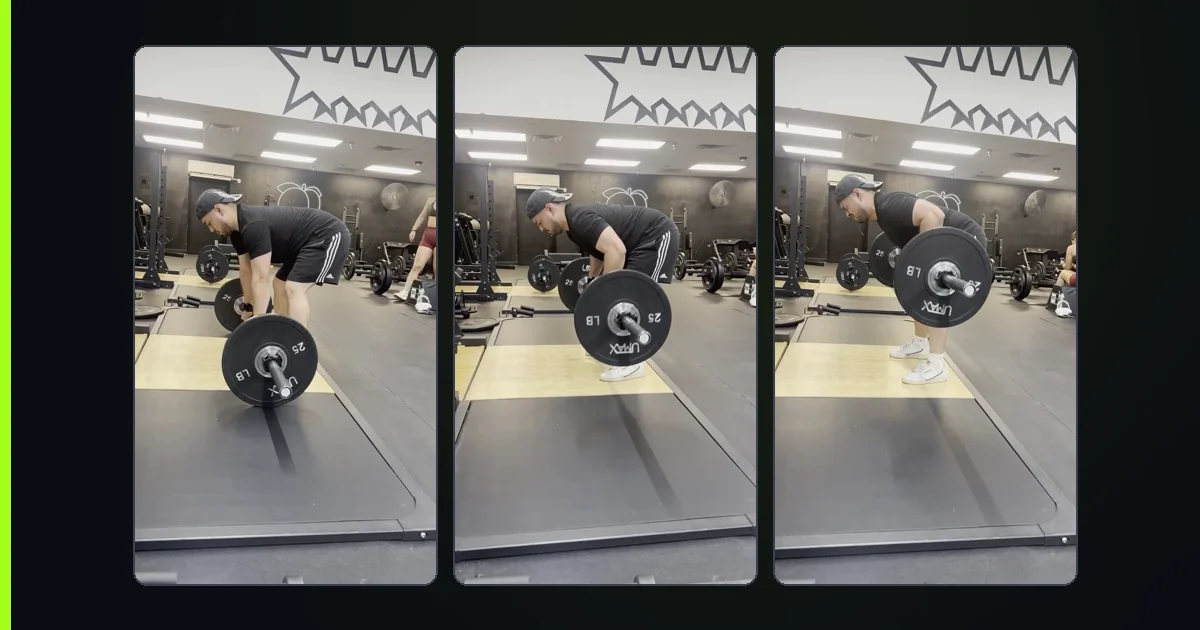
For an adult man competing raw in the 83 kg (183 lb) class, the median best deadlift is about 485 lb (220 kg). For a woman in the 63 kg (139 lb) class, the median is about 285 lb (130 kg). Those medians describe 298,005 people who entered powerlifting meets since 2015, a much stronger group than gym-goers overall.
A deadlift standard is only as good as the people behind it. The tables on this page were built from OpenPowerlifting, an open archive of meet results, and each row lists exactly how many lifters it summarises.
Keep one thing in mind while reading: everyone counted here chose to compete. They trained toward a meet, made weight and pulled in front of judges. Comparing yourself with them is comparing yourself with a strong, motivated crowd, so a result under their median is no sign that something is wrong.
How was the deadlift data filtered?
Only full-power meets in the raw division were used. Raw permits a belt and knee sleeves; straps, deadlift suits and wraps are not part of it. From there:
- Meet dates from 1 January 2015 through mid-October 2026.
- Lifters aged 18 or over by recorded age. When the exact age was missing, the age class had to begin at 18 or higher; entries with no age data were excluded.
- A completed total was required, so disqualified lifters, doping disqualifications and no-shows are gone.
- Every lifter appears once. Their single heaviest successful deadlift in the window is the value used, which stops regular competitors from counting several times.
- The weight class comes from the bodyweight logged at the meet where that heaviest pull happened, sorted into current IPF classes.
The result covers 198,913 men and 99,092 women. Pounds are rounded to the nearest 5 and kilograms to the nearest 2.5. In the tables, p10 means the 10th percentile, p50 is the median, and so on.
Deadlift standards for men
| Weight class | Deadlift p10 | p25 | p50 | p75 | p90 | Lifters counted |
|---|---|---|---|---|---|---|
| 59 kg and under (130 lb) | 265 | 320 | 375 | 425 | 470 | 3,978 |
| 66 kg and under (146 lb) | 315 | 365 | 420 | 465 | 505 | 9,526 |
| 74 kg and under (163 lb) | 355 | 395 | 445 | 500 | 540 | 24,667 |
| 83 kg and under (183 lb) | 380 | 430 | 485 | 530 | 585 | 43,012 |
| 93 kg and under (205 lb) | 400 | 450 | 505 | 560 | 610 | 44,000 |
| 105 kg and under (231 lb) | 420 | 475 | 530 | 590 | 640 | 36,985 |
| 120 kg and under (265 lb) | 435 | 495 | 550 | 615 | 670 | 22,600 |
| 120+ kg (265+ lb) | 440 | 500 | 570 | 635 | 705 | 14,145 |
| Every class | 380 | 440 | 500 | 560 | 625 | 198,913 |
Those pulls are in pounds. Here they are in kilograms:
| Weight class | Deadlift p10 | p25 | p50 | p75 | p90 | Lifters counted |
|---|---|---|---|---|---|---|
| 59 kg and under (130 lb) | 120 | 145 | 170 | 192.5 | 212.5 | 3,978 |
| 66 kg and under (146 lb) | 142.5 | 165 | 190 | 210 | 230 | 9,526 |
| 74 kg and under (163 lb) | 160 | 180 | 202.5 | 227.5 | 245 | 24,667 |
| 83 kg and under (183 lb) | 172.5 | 195 | 220 | 240 | 265 | 43,012 |
| 93 kg and under (205 lb) | 182.5 | 205 | 230 | 255 | 277.5 | 44,000 |
| 105 kg and under (231 lb) | 190 | 215 | 240 | 267.5 | 290 | 36,985 |
| 120 kg and under (265 lb) | 197.5 | 225 | 250 | 280 | 305 | 22,600 |
| 120+ kg (265+ lb) | 200 | 227.5 | 257.5 | 287.5 | 320 | 14,145 |
| Every class | 172.5 | 200 | 227.5 | 255 | 282.5 | 198,913 |
Deadlift standards for women
| Weight class | Deadlift p10 | p25 | p50 | p75 | p90 | Lifters counted |
|---|---|---|---|---|---|---|
| 47 kg and under (104 lb) | 165 | 200 | 235 | 270 | 305 | 2,377 |
| 52 kg and under (115 lb) | 185 | 220 | 260 | 290 | 330 | 6,424 |
| 57 kg and under (126 lb) | 205 | 235 | 275 | 315 | 345 | 10,990 |
| 63 kg and under (139 lb) | 215 | 250 | 285 | 325 | 360 | 17,008 |
| 69 kg and under (152 lb) | 225 | 260 | 300 | 335 | 375 | 17,422 |
| 76 kg and under (168 lb) | 235 | 270 | 310 | 355 | 390 | 16,702 |
| 84 kg and under (185 lb) | 240 | 275 | 315 | 360 | 400 | 11,761 |
| 84+ kg (185+ lb) | 250 | 285 | 325 | 370 | 415 | 16,408 |
| Every class | 220 | 255 | 300 | 340 | 380 | 99,092 |
Pounds above; kilograms below:
| Weight class | Deadlift p10 | p25 | p50 | p75 | p90 | Lifters counted |
|---|---|---|---|---|---|---|
| 47 kg and under (104 lb) | 75 | 90 | 107.5 | 122.5 | 137.5 | 2,377 |
| 52 kg and under (115 lb) | 85 | 100 | 117.5 | 132.5 | 150 | 6,424 |
| 57 kg and under (126 lb) | 92.5 | 107.5 | 125 | 142.5 | 157.5 | 10,990 |
| 63 kg and under (139 lb) | 97.5 | 112.5 | 130 | 147.5 | 162.5 | 17,008 |
| 69 kg and under (152 lb) | 102.5 | 117.5 | 135 | 152.5 | 170 | 17,422 |
| 76 kg and under (168 lb) | 107.5 | 122.5 | 140 | 160 | 177.5 | 16,702 |
| 84 kg and under (185 lb) | 110 | 125 | 142.5 | 162.5 | 182.5 | 11,761 |
| 84+ kg (185+ lb) | 112.5 | 130 | 147.5 | 167.5 | 187.5 | 16,408 |
| Every class | 100 | 115 | 135 | 155 | 172.5 | 99,092 |
- 47 kg235 lb
- 52 kg260 lb
- 57 kg275 lb
- 63 kg285 lb
- 69 kg300 lb
- 76 kg310 lb
- 84 kg315 lb
- 84+ kg325 lb
What does p50 mean in a deadlift table?
Each column is a cut point. Take the 93 kg men: p25 is 450 lb, so one competitor in four in that class never pulled more than 450 at a meet. The p50 figure, 505 lb, is the middle lifter. p90 is 610 lb, a pull that only one in ten reached.
You will not find "beginner" or "elite" tags on this page. Nothing in meet results says how long someone had been training, so a level name would be invented. Talk about bands instead: under p25 is the bottom quarter of meet lifters, p25 to p75 is the middle half, and over p90 is the top tenth.
What is a good deadlift for a 200 lb man?
At 200 lb you belong in the 93 kg class (up to 205 lb). Half of the raw men there pulled between roughly 450 and 560 lb, and the median sat at 505 lb (230 kg). Even p10 for that class is 400 lb, which shows how selective a meet entry list is.
What is a good deadlift for a 135 lb woman?
A 135 lb woman competes in the 63 kg class (up to 139 lb). The median woman there deadlifted about 285 lb (130 kg), and the middle half ranged from about 250 to 325 lb. A double-bodyweight pull at 135 lb is 270 lb, between that class's p25 and median.
How does the deadlift compare with the squat?
Competitors pull more than they squat. In the 83 kg men's class the median deadlift, 485 lb, is about 18 percent above the median squat of 410 lb. In the 63 kg women's class the gap is wider: 285 lb against 230 lb, roughly 24 percent. The full squat tables, built the same way, are in squat strength standards.
How do I get a deadlift max to compare?
Testing a true single is optional. Pull a hard set of 3 to 5 with clean form and estimate from it using the formulas in how to calculate your one-rep max, or type the set into the 1RM calculator. If you lift in a gym and not on a platform, the strength standards calculator shows where a pull like that lands at your age and weight, judged strapless from the floor. Once you have a number, one-rep max percentages explained shows how to turn it into training weights.
Compare like with like. A meet deadlift must be locked out with knees and hips straight and shoulders back, and the lifter has to wait for the down signal. Pulling with straps, or lowering the bar before reaching full lockout, gives a number these tables were never built for.
Where these deadlift standards fall short
- This is a competitor sample. The people in it trained for a meet. Lifters who never compete would likely sit lower, but there is no public dataset that measures them in the same way, so the size of that gap is unknown.
- Career bests, not typical days. Using each lifter's heaviest pull since 2015 lifts the percentiles a little.
- Stance is not recorded. Sumo and conventional pulls are both legal at meets and the data does not separate them.
- The deadlift comes last. At a full-power meet it follows the squat and bench, so some lifters pull less than they would fresh.
- Bodyweight can be understated. With weigh-ins up to 24 hours before lifting in some federations, lifters often weigh more on the platform than their class.
- Drug-tested and untested results are pooled, and so are all adult ages.
To keep your own pull climbing, progressive overload explained lays out the basic rules.
Sources
- OpenPowerlifting, data release dated 2026-10-24 (meet results through 2026-10-18). Public domain: "OpenPowerlifting data is contributed to the public domain." This page uses data from the OpenPowerlifting project, openpowerlifting.org. You may download a copy of the data at gitlab.com/openpowerlifting/opl-data.
- OpenPowerlifting CSV download used for this analysis: openpowerlifting-latest.zip
Frequently asked questions
What is the average deadlift for a man?
Across all weight classes, the median best deadlift of 198,913 adult men in raw powerlifting meets since 2015 was about 500 lb (227.5 kg). That figure describes competitors. Men who train without competing will usually pull less, but no comparable public data shows by how much.
What is the average deadlift for a woman?
Across all weight classes, 99,092 adult women in raw meets since 2015 had a median best deadlift of about 300 lb (135 kg). In the 63 kg (139 lb) class the median was about 285 lb.
Is a double-bodyweight deadlift good?
Against meet competitors it depends on size. A 183 lb man pulling 366 lb sits under the p10 of 380 lb for his class, while a 135 lb woman pulling 270 lb lands between p25 and the median of her class.
Do these deadlift standards allow straps?
No. They come from the raw division at full-power meets, where straps are not allowed. A belt and knee sleeves are.
Are there overhead press standards from the same data?
No. Powerlifting meets do not include an overhead press, so meet results cannot give press standards the way they do for the deadlift and squat.
New lifting guides every week
Short training clips and the numbers behind them. Follow along or start training free.
Keep reading
How Much Should You Squat? Squat Standards by Bodyweight
Squat percentiles for men and women by weight class, in lb and kg, from 298,005 raw powerlifters since 2015. What they mean if you have never competed.
How to Calculate Your One-Rep Max (Without Testing It)
Estimate your 1RM from a lighter set with the Epley and Brzycki formulas. Worked examples, a comparison table, and how accurate the numbers really are.
One-Rep Max Percentages Explained (and When to Test Your Max)
A training percentage is intensity, not effort. See how a 325 lb max turns into working weights, and when a coach tests a true max versus a 3 or 5 rep max.
Progressive Overload Explained (and What to Do When It Stalls)
Progressive overload in plain terms: add reps first, then weight, how much to add as a beginner, and how to push past a plateau with tempo and pauses.