
Advice for New Lifters: The One-Page Version
By Jordan Hoppel · · Updated · 3 min read
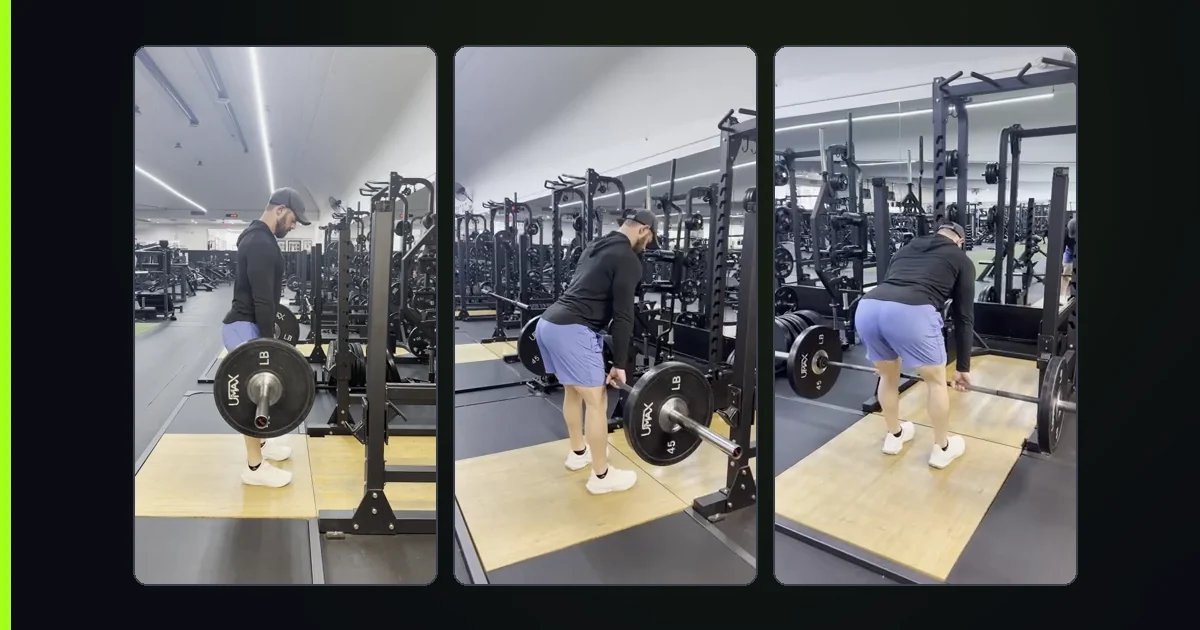
My advice for new lifters: be consistent within a bandwidth you can sustain, without big peaks and troughs. Do not promise yourself what you cannot keep, and if you miss a day, come back the next day and do it better. Do not progress too fast, and never trade good form for a potential gain.
If you ask me for one page of advice for a new lifter, it would be general and boring, because that's the stuff that works.
1. Maintain consistency
Don't be ridiculously, unbelievably strict, but have a bandwidth you can stay within across life, working out, exercise, sleep and recovery, without really high peaks and really low troughs. You don't need to be perfect all the time; manage how far you stray from the maintenance line.
The picture is a line with a band around it. A good week and a bad week both land inside the band, and the habit survives either.
2. Don't make promises you can't keep
If you're going to do something, make sure you can do it consistently. The stress and mental anguish of beating yourself up over a missed workout or eating poorly isn't worth it.
Come back the next day and do it better. You can't recover tomorrow; tomorrow's gone. You can only control right now and try to be better for the future.
This also connects to scheduling. When I build a plan, I ask what you can fully commit to. See how to choose a workout program.
3. Don't progress too fast
Don't over-progress yourself. Beginners get rapid gains early, get excited and assume the pace will hold, which isn't the case. Early gains are mostly neurological, so the slower stretch comes next. See how long to stick with a workout program.
4. Always lift with good form
Good form is the foundation of everything, and nothing should be sacrificed and put in place of it for any potential gain. If a lift stalls, the first suspect is usually technique. See the beginner lifting guide.
What staying inside the band looks like
Say you plan three sessions this week. Training all three is a good week. Training two because work ran late is still inside the band, and the habit survives. The week that breaks the habit is the one where a missed session turns into "I'll start again Monday" and then into a month.
My fix is always the same: come back the next day. A useful test before you commit to any plan is to ask whether you could keep it up in the worst week of your month. If you couldn't, shrink the plan until you could. Three sessions you finish beat five you plan and skip.
What should a new lifter expect in the first few months?
Early progress is quick, then it slows down, and that is normal. Part of the reason is how strength is gained at the start. A classic study followed 15 young adults through an 8-week strength program and found that neural factors accounted for most of the early strength gain, with muscle growth becoming the bigger contributor after roughly the first 3 to 5 weeks (Moritani and deVries, 1979). It was a small study, but it fits what I see: beginners get excited by fast early gains and assume the pace will hold.
Plan for the slower stretch. It is where most of your training years will be spent, and it is the reason "don't over-progress yourself" is on the list.
Who gets the most out of coaching?
I coach best people who are willing to work hard, learn, and be open to suggestion. I'm a poor fit for people who are arrogant, cocky, think they know it all, and are lazy and don't work hard. That's useful self-assessment even if you never hire a coach: be the first kind of person.
What matters most for a new lifter?
Four rules, in order:
- Stay inside a range you can hold.
- Promise only what you can keep.
- Go slower than you want to.
- Never trade form for weight.
Sources
- Moritani T, deVries HA. Neural factors versus hypertrophy in the time course of muscle strength gain. Am J Phys Med. 1979;58(3):115-130. PubMed 453338
Frequently asked questions
What is your one page of advice for a new lifter?
It would be general and boring, because that's the stuff that works: stay consistent, keep a sustainable bandwidth, don't over-progress, and always lift with good form.
What if I miss a workout?
The stress and mental anguish of beating yourself up over a missed workout or eating poorly isn't worth it. Come back the next day and do it better.
Who is a bad fit for coaching?
People who are arrogant, cocky, think they know it all, and are lazy and don't work hard. The best fits are willing to work hard, learn, and be open to suggestion.
New lifting guides every week
Short training clips and the numbers behind them. Follow along or start training free.
Keep reading
Beginner Lifting Guide: What a Coach Does in Your First Weeks
Who counts as a true beginner, what you need to start, how a coach runs week one, how much weight to add, and which movement patterns to learn first.
How Long Should You Stick With a Workout Program?
Why a first program needs 8 to 12 weeks, what you miss when you switch after week one, and why early gains are mostly neurological, not muscle.
How to Choose a Workout Program
Three questions a strength coach asks before picking a program, how goals change the training, and the mistakes that send people to the wrong one.